Disclaimer: The views on this site are entirely my own and do not represent those of any employer, past or present. This post reflects on a graduate coursework assignment and on a personal bereavement. Some details have been withheld out of respect for my family’s privacy. Nothing here is clinical advice and nothing here is a diagnosis — of me, of anyone in my family, or of anyone else. Where I describe research, I am reporting what the papers say, not delivering a verdict on a contested field.
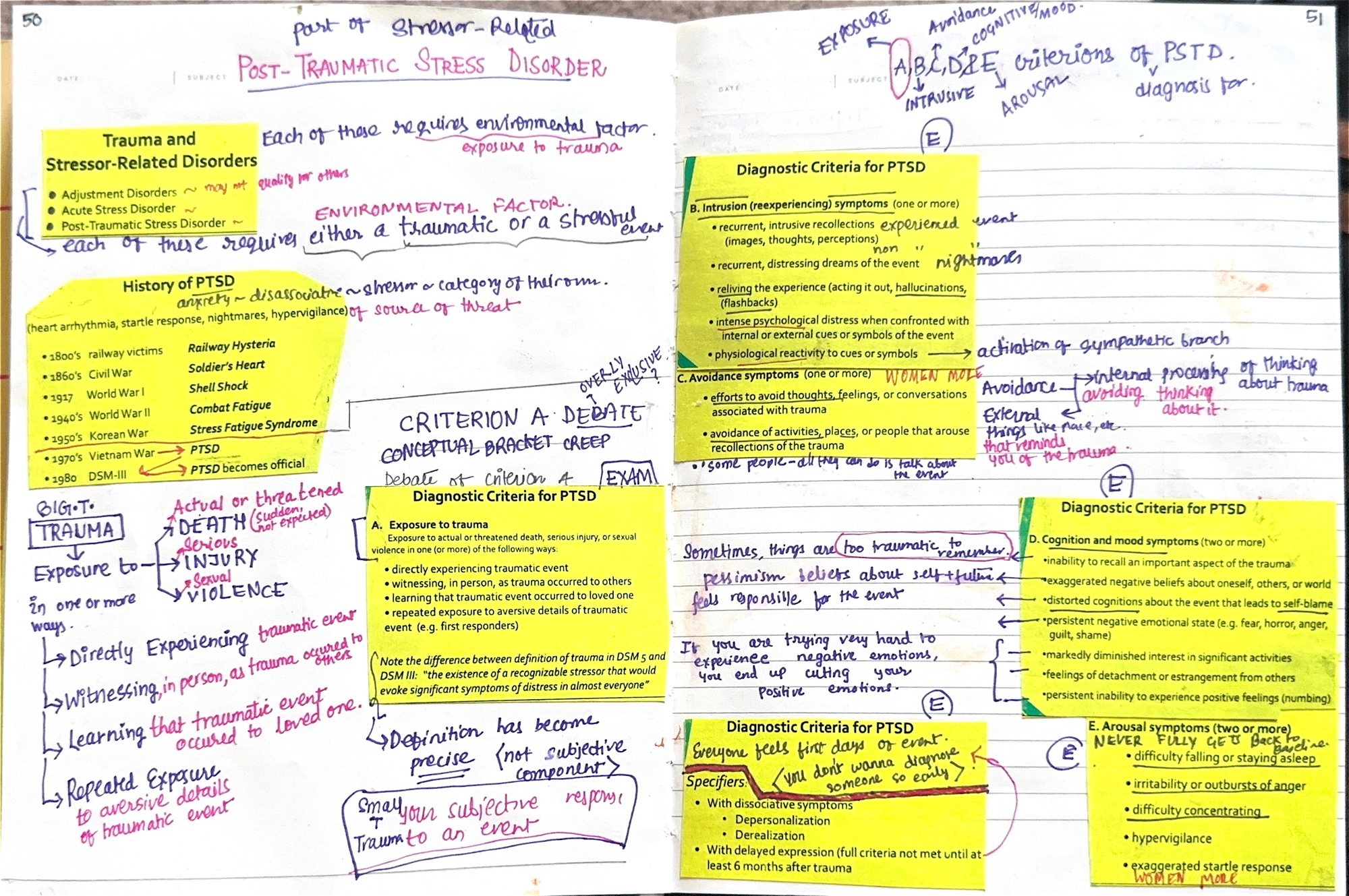
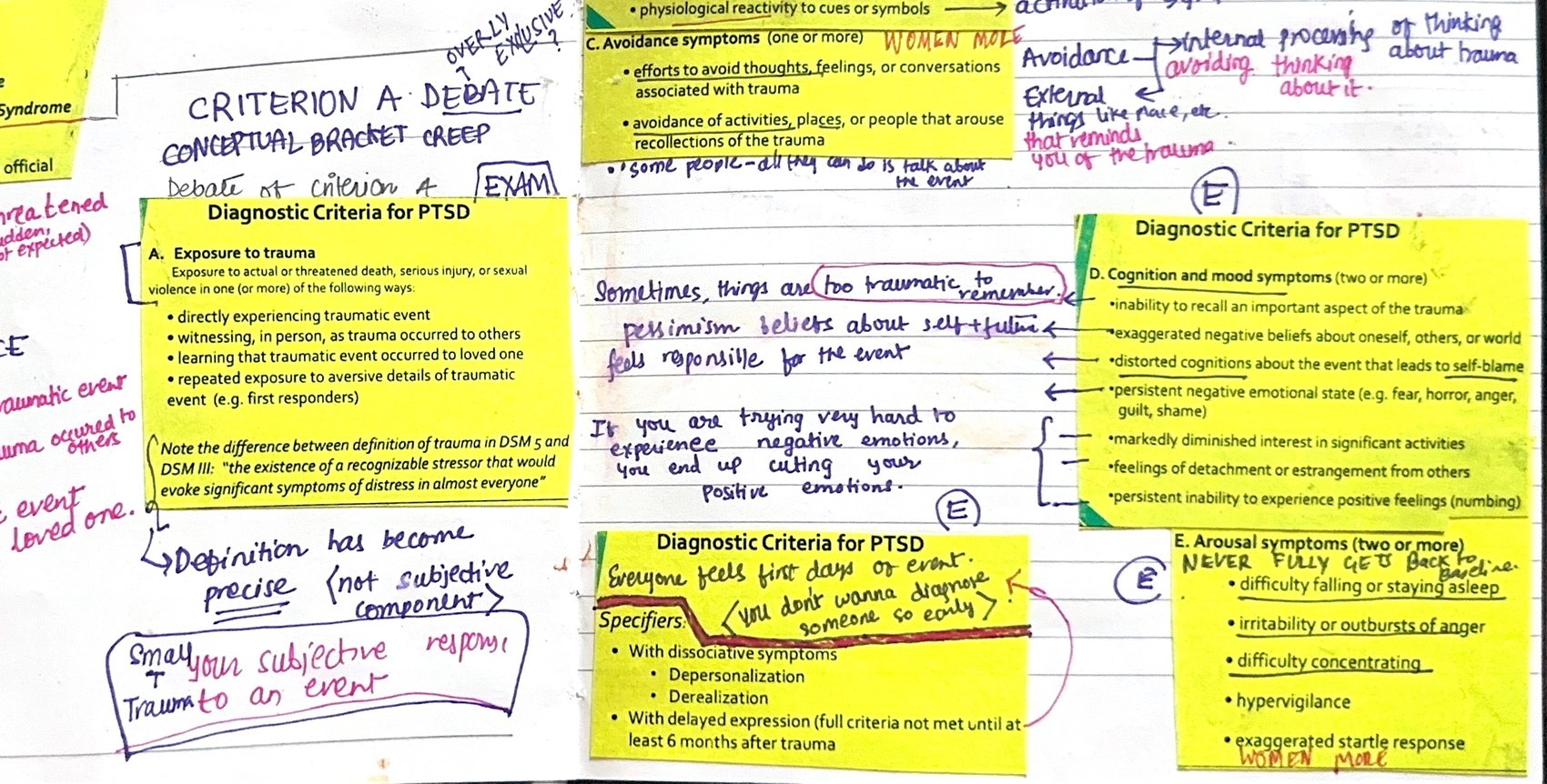
A weekly response paper. One prompt, three pages, due on a Monday. I argued a position I still mostly hold and supported it with the hardest thing that has happened to me. A year later I went back to my own notes from that week and found the objection to my own paper already there, in my own handwriting — along with the fact that the specific clause I had praised for its precision was written to exclude the exact kind of loss I was describing. Not incidentally. On purpose, and in the published record of why.
Every system that offers help must first decide who qualifies, and that decision is always a definition written by people who will never meet you. A threshold. A set of ranges. A list of qualifying events. If your situation fits, the system engages; if it doesn’t, the system isn’t cruel to you — it simply has nothing to say. I have spent a career writing acceptance criteria for a living, so I know exactly what kind of document that is. I still managed to argue in favour of one without ever running my own case through it.
I’m going to use that vocabulary throughout — specifications, criteria, gates. Not because grief is an engineering problem. Because it is the only language I have that treats a definition as something people built, on a date, for a stated reason, and can therefore be asked to account for. The lens is borrowed. What it is pointed at is not.
Before any of this makes sense, four words have to mean something specific.
What I am actually trying to understand
A diagnosis is a decision made against a written specification. Four definitions before the argument.
Trauma
In everyday speech, anything that hurt badly. In the manual, something much narrower: exposure to actual or threatened death, serious injury, or sexual violence. The two meanings share a word and disagree about who they cover — which is the whole subject of this piece.
The DSM
The Diagnostic and Statistical Manual of Mental Disorders, published by the American Psychiatric Association and revised by appointed work groups of clinicians and researchers. Not a law and not a textbook — a classification standard. It is what clinicians diagnose from, what researchers sample by, what insurers reimburse against, and what gets cited in court.
Its versions
Eight releases in seventy years. Each one renegotiates boundaries, and the numbering hides how much moves.
I 1952 · II 1968 · III 1980 · III-R 1987 · IV 1994 · IV-TR 2000 · 5 2013 · 5-TR 2022
PTSD first appears in 1980. The clause this article is about changes in 2013.
Criteria
Each disorder is a lettered checklist, and the letters are conjunctive — all of them must hold. For PTSD:
A · exposure
B · intrusion
C · avoidance
D · cognition & mood
E · arousal
A is the gate. Fail it and B through E are never assessed — which is exactly how an acceptance criterion behaves.
The prompt
The assignment gave no room to hedge:
One of the criteria for diagnosing PTSD is exposure to trauma. DSM presents an objective definition of trauma (confrontation with actual or threatened death, serious injury, or sexual assault to self or others). Do you think the definition of exposure to trauma should be objective (as it is currently in DSM) or should it be subjective (based on one’s reaction or interpretation of an event as traumatic)?
I picked objective, and built three supports under it.
One: the definition keeps getting tighter, and tighter read as progress. DSM-III in 1980 asked only for “the existence of a recognizable stressor.” By DSM-5-TR the requirement is exposure tied to actual or threatened death, serious injury, or sexual violence. I read the direction of travel as a field getting better at its own boundaries.
Two: a tight criterion keeps the manual coherent. If anything distressing counts as exposure, the exposure criterion stops doing work and PTSD becomes a name for feeling bad after something bad. I still believe this, and the literature I had summarised and then failed to use believes it harder than I did.
Three: personal reflection. I wrote that I appreciated how the criterion is written because it “keeps the definition clinically clear while still allowing space to recognize more complex forms of emotional exposure.” Then I offered myself as the illustration.
What I offered as evidence
Some years ago I lost my mother. It was sudden, and it followed a long-managed medical condition. When I travelled back for her last rites, I learned things about her final weeks that I had not known while they were happening — that she had been isolated, that her support system had been taken away from her, and that decisions about her care were made against her own stated wishes, in a setting without the resources she needed. She died soon after, without her family present.
What I wrote about my own reaction, quoted from the paper I submitted for a grade — lightly abridged here for privacy:
“My reaction was shaped by the weight of the role loss, the helplessness I felt, the betrayal and apathy of other people involved, anger … and the way her dignity was denied in the end. It stayed with me for a long time.”
And then the sentence that closed the paper:
“I believe the DSM leaves room for clinicians to interpret Criterion A carefully when emotional proximity, moral conflict, and psychological impact are involved, without losing the objectivity the framework is built on.”
That last sentence is the defect. Not because it’s soft, but because it is factually wrong about the document it is praising — and the correction is in my own handwriting.
The clause
Here is how Criterion A has actually moved, edition by edition.
Forty years of redrawing one line
| Edition | What counted as exposure |
|---|---|
| DSM-III · 1980 | A "recognizable stressor" that would distress almost anyone, generally outside the range of usual human experience. |
| DSM-III-R · 1987 | Same idea, now with examples — including learning of serious threat or harm to a close relative or friend. |
| DSM-IV · 1994 | Split in two: A1, the objective event, and A2, the person's response — "intense fear, helplessness, or horror." The text lists qualifying examples including learning about the sudden, unexpected death of a family member, and being diagnosed with a life-threatening illness. |
| DSM-5 · 2013 | A2 deleted. Indirect exposure kept, but for a death it must have been violent or accidental. Occupational exposure to aversive details added. |
| DSM-5-TR · 2022 | Criteria unchanged; text expanded to discuss subjective response in medical events. Prolonged grief disorder added elsewhere in the manual. |
Here is the sentence I should have quoted instead of my own. Marx and colleagues, reviewing the Criterion A debate in the Journal of Traumatic Stress — a paper I had read, and taken notes on, two weeks before I wrote mine:
“Criterion A1 became more restrictive to eliminate the possibility of certain experiences, particularly the death of an elderly loved one by natural causes, which was often endorsed under DSM-IV; however, the sudden violent or accidental death of an elderly loved one still qualified as a Criterion A event.”
Read that against my three pages. The tightening I praised as evidence of a maturing field was, in its own stated rationale, a change made to remove deaths like the one I was writing about from the criterion. Death by natural causes, learned about afterward, by someone who wasn’t there. Under DSM-IV, that was explicitly listed as qualifying. Under DSM-5 it is explicitly not.
I did not argue for a definition that happened to exclude me. I argued for the specific clause whose documented purpose was to exclude the category I belong to, and I used my belonging to that category as supporting evidence. In my working life that failure has a name: I approved the criteria and never ran my own case through them. It is the one mistake a decade of quality work should have made impossible, and I made it on the subject I had the most reason to be careful about.
The paper vs. the published rationale
What I wrote
"The DSM leaves room for clinicians to interpret Criterion A carefully when emotional proximity, moral conflict, and psychological impact are involved."
Written without checking the rationale for the revision I was praising.
What the rationale says
Criterion A1 was made "more restrictive to eliminate the possibility of certain experiences, particularly the death of an elderly loved one by natural causes."
Assigned reading. Two weeks before I submitted.
The field already ran my prompt as an experiment
Here is what makes the paper worse and the topic better. My prompt asked: objective or subjective? The manual has already tried both.
DSM-IV added Criterion A2 — the requirement that the person’s response involve intense fear, helplessness, or horror. It was explicitly a gatekeeper, a subjective filter bolted onto an objective list. DSM-5 deleted it, for two reported reasons: it was not sufficiently predictive of who actually developed PTSD, and it recognised only fear, helplessness and horror while excluding other common reactions — dissociation, disgust, and anger.
Go back to my own sentence. Helplessness. Betrayal. Apathy. Anger. The subjective criterion that once existed would have counted one of those words and ignored the rest — and then it was removed anyway, for not predicting the outcome it was built to gate.
Criterion A2 · added 1994 · deleted 2013
The subjective gate the manual tried, measured, and withdrew — and the three words it was willing to count.
A2 counted
intense fear
helplessness
horror
A2 ignored
dissociation
disgust
anger
What I wrote down
helplessness — counted
betrayal — no field
apathy — no field
anger — excluded
So the honest answer to the prompt is not “objective” or “subjective.” It’s that the field ran the subjective version for nineteen years, measured it, and withdrew it. My paper argued for a position without knowing the experiment had already been reported.
The criterion may well have covered her
One more thing I missed, and this is the part I have had the hardest time sitting with.
DSM-5-TR expanded its discussion of medical events — describing, for instance, a moment in treatment that evokes catastrophic feelings of terror, pain, helplessness or imminent death. A patient in acute medical crisis, aware of what is happening to her, can meet Criterion A.
She may well have met it. Isolated, her wishes overridden, cared for somewhere without the resources she needed. If anyone in that story was exposed within the meaning of the criterion, it was her, and there is no version of this article in which that isn’t the more important fact.
What the criterion does not do is carry across. Exposure is not heritable through a phone call. I received the account; I was not in the room. That is precisely the distinction the 2013 revision was designed to enforce, and — read cold, as a specification — the distinction is defensible. It is also the reason a definition can be correct and still leave someone holding something it has no name for.
One event, two people, one criterion
Exposure is a property of position, not of pain.
Her position
In the room. In acute medical crisis. Aware of what was happening. DSM-5-TR discusses exactly this — a moment in treatment evoking terror, pain, helplessness, or imminent death.
May well meet Criterion A
My position
Not present. Told afterward. Death by natural causes rather than violence or accident — the one indirect route the 2013 revision closed.
Does not meet Criterion A
Four positions, and I took the one I didn’t know I was taking
The review lays out the four positions the field actually holds:
Expand
People report PTSD-like symptoms after events the criterion excludes — bereavement, divorce, financial collapse, childbirth, racial discrimination, the pandemic.
Narrow
Secondhand, informational exposure should be removed entirely. McNally's "conceptual bracket creep": an over-inclusive criterion pathologizes ordinary distress and blurs what the diagnosis is for.
Eliminate
No wording will ever be unambiguous, and the criterion doesn't predict diagnosis well. Define PTSD by its symptoms and drop the event list.
Leave unchanged
The evidence for changing it is mostly cross-sectional self-report with weak trauma histories. Don't move a criterion on data that thin.
And the narrowing camp would go further than the 2013 revision did: strip out all indirect informational exposure, so that only direct victims and physically present witnesses qualify. Under that proposal I am not a marginal case at all. I am cleanly, deliberately outside — eligible for a different diagnosis, but not this one.
The strongest argument against me, which I have to concede
If I want the criterion widened to cover what happened to me, I have to answer the objection that my own discipline should have raised first, and it’s the one the review makes plainly: it’s circular. Saying an event must be traumatic because it produced trauma-like symptoms defines the cause by its effect. And most people exposed to unambiguous Criterion A events never develop PTSD, so symptoms cannot be what makes an event qualify.
I build measurement instruments in another course. I know what it means when the predictor is defined by the outcome — it means I have no instrument, just a restatement. So I don’t get to argue for expansion on the strength of my own reaction. That reaction is not evidence about the criterion. It’s evidence about me.
Is it a dysfunction at all?
Another assigned paper reframed the whole question for me after the fact: Wakefield’s argument that a disorder is a harmful dysfunction — harm plus the failure of some internal mechanism to do what it evolved to do. The test isn’t whether something hurts. It’s whether something is broken.
Applied honestly to my own case, that is uncomfortable in a useful direction. Grief at a parent’s undignified death, anger at the people who allowed it, a year of it staying with me — none of that is a mechanism failing. That is a mechanism working. Attachment doing precisely what attachment is for.
Which means the manual’s silence may not be a gap in coverage. It may be the manual correctly declining to call a functioning response a disorder — and my complaint may really be that no diagnostic code was ever the right container for what I wanted acknowledged.
The construct I described and couldn’t name
Except one part doesn’t dissolve under that reading. Look again at what I wrote: the betrayal and apathy of other people involved, her dignity denied.
That isn’t fear, and it isn’t only grief. It is very close to the published description of moral injury — a construct developed largely in military psychology, in Shay’s work and later Litz and colleagues’, for what happens when someone in a position of legitimate responsibility betrays what is right in a high-stakes situation. The injury is not that something terrifying happened. It is that something was owed and withheld.
That distinction matters more than any word count I can give it. PTSD, as the criteria describe it, is organised around threat — the body’s alarm system stuck in the on position, memory intruding, arousal that never resets. What I was describing has almost none of that shape. There was no threat to me. There was a duty of care, and people who held it, and a decision made against her wishes by someone who could have chosen otherwise. Fear is not the injury. Betrayal is.
The construct exists precisely because clinicians kept meeting people like that — combat medics, veterans, later nurses in overwhelmed hospitals — whose accounts were full of guilt, betrayal and moral outrage rather than fear, and whose presentations the trauma criteria could not hold. It has been given definitions, and instruments to measure it, and a substantial literature. What it has never been given is a code.
So the honest answer to what happened to me is not that the DSM got it wrong. It is that the closest available name for it lives outside the DSM entirely — which means no clinician diagnoses it, no insurer reimburses it, and no epidemiologist counts it. I described that construct in my own words, from the inside, and then argued in the same paper that the manual’s coverage was adequate. I had the finding and wrote the opposite conclusion.
Where the experience actually lands
| Container | Verdict |
|---|---|
| PTSD | Fails at the first gate. Criterion A is not met, so nothing downstream is assessed. |
| Acute stress disorder | Same exposure requirement, same result. |
| Adjustment disorder | The route the DSM-IV text named for symptoms following a non-Criterion-A event. The available container. |
| Prolonged grief disorder | Added in the 2022 revision — the one I cited as proof the manual keeps getting tighter, without reading what it had just argued about. |
| Moral injury | Closest to what I described. No code at all. |
| Institutional failure | Not a psychiatric category, and never will be. The manual has no field for it because that is not what the manual is. |
One more thing, and then I’ll leave the research alone. That same week I was also reading about trauma effects passed between generations through DNA methylation — evidence that is early, and genuinely contested.
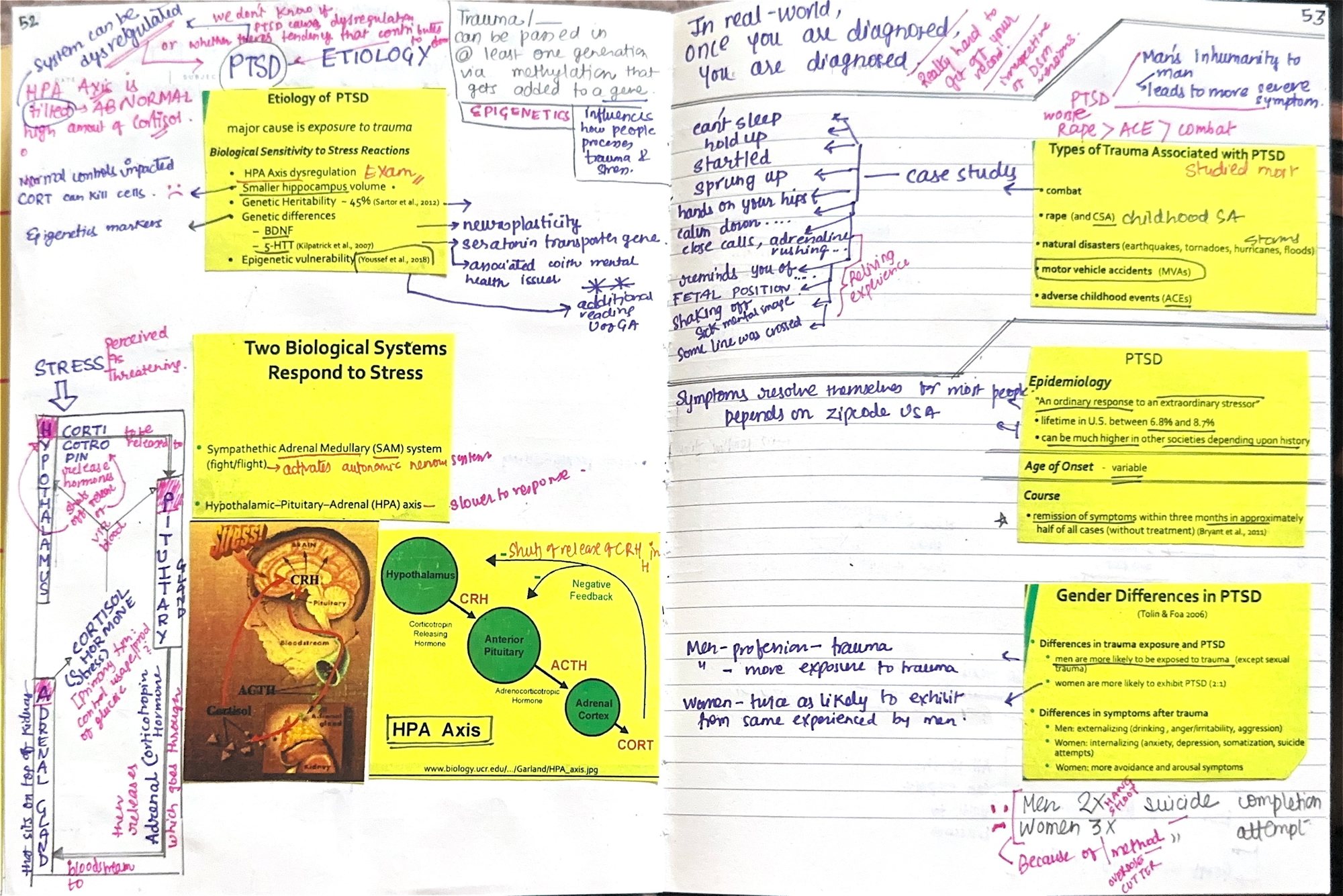
One field is asking whether trauma travels across generations. The other has a criterion that will not travel between two people in the same family across a single phone call. Both can be right — research is allowed to reach where a diagnostic manual must not — but it is a strange pair of ideas to hold in one week.
What the manual has no field for
The last point is the one my paper never went near.
What harmed her was a system: rationed capacity, a support network removed, a stated wish overridden, a setting without the resources to treat her. The manual codes the reaction of the person left behind. It has no field for the failure that produced it. That is not a flaw in the DSM — the DSM classifies disorders in individuals, and it is doing its job. It is a flaw in using the DSM alone to decide who was harmed and by what.
I have written elsewhere that the work is to fix broken systems, not broken people. That’s easy to say when the system is a hiring process. This is the version that cost something.
What I would submit now
Same position. Four repairs.
- Answer the question, then run my own case through my own answer — and when it fails, report the failure as the finding rather than hiding it in a closing sentence.
- Quote the rationale, not just the wording. “It got tighter” is not an argument. Why it got tighter is the argument, and the why is published.
- Name where the case actually lands — adjustment disorder, prolonged grief disorder, moral injury with no code at all — instead of implying a criterion is flexible when what’s flexible is the taxonomy around it.
- Report the debate as open, including the circularity objection that cuts against me, and stop borrowing the authority of a revision whose controversy I hadn’t read.
The position I would still defend: keep Criterion A objective. A definition that admits everything protects no one, and the circularity trap is real. But objective is not the same as complete, and I wrote a paper that quietly treated them as one word — using, as its closing evidence, a loss the definition was rewritten to exclude.
My equity creed for another course contains a clause I clearly hadn’t internalised: expect and accept non-closure. This is what that looks like when it isn’t a slogan.
What I have settled on, for myself, is narrower than a diagnosis and more useful than one. I stopped waiting for the manual to have a row for it. The thing I needed was never a code — it was an accurate account: that she was failed by people with a duty of care, that the failure was moral rather than accidental, and that my anger has a referent outside my own head. No clinician had to sign that. Writing it down carefully turned out to be the whole of what I was asking a diagnostic category to do for me, and a category was never going to be able to do it.
Which leaves the criterion where it should be. Criterion A is a rule for deciding who has a specific disorder. It was never a rule for deciding whose loss was real, and I spent a year quietly asking it to be both.
Thank you for reading something I would rather have kept private. If you have ever had a form, a threshold, or a policy inform you that what happened to you did not qualify — what did you do with the part that didn’t fit?
Comments